
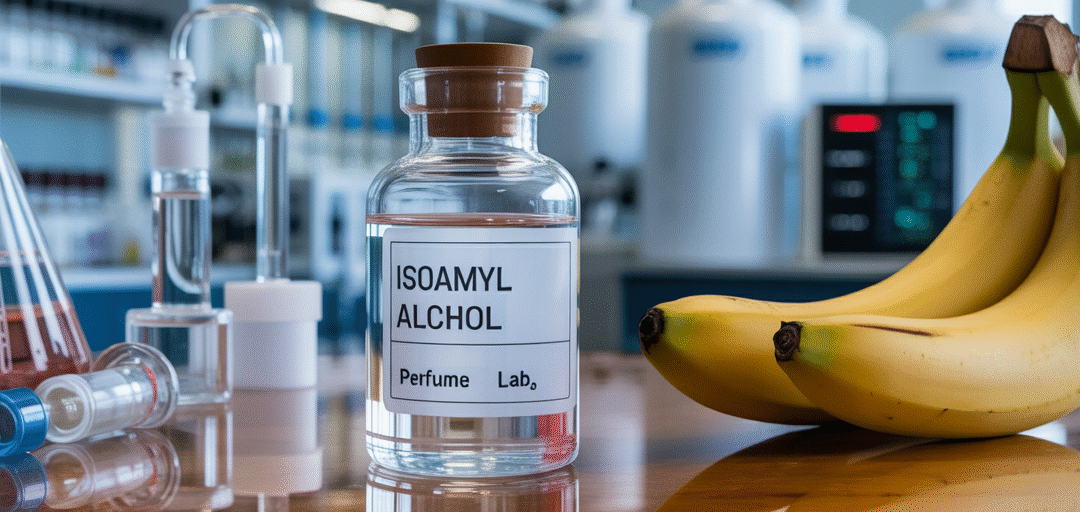
Isoamyl alcohol—also known as isopentyl alcohol or 3-methyl-1-butanol—is a shape-shifting ingredient that comfortably bridges fragrance labs, coatings plants, pharmaceutical clean rooms, breweries, and even the R&D bays of alternative fuels. In perfumery it’s the backbone behind “banana” and “pear drop” notes once it’s converted to fruity esters; in coatings and inks it’s a dependable, high-boiling solvent; in pharma it acts as a versatile process solvent and intermediate; in fermentation it’s a natural “fusel” higher alcohol; and in energy research it shows promising fuel properties as a branched C5 alcohol.
This sector-by-sector journey explains what isoamyl alcohol is, how it’s made (both from petrochemical oxo routes and by valorising fusel oil), where and why demand is growing, and how formulators can use it safely. We’ll also reconcile widely diverging market numbers, sifting headline claims from merchant-market realities. Two compact tables and a quick chart summarise what buyers, specifiers, and investors need right now.
What Isoamyl Alcohol Actually Is (and Isn’t)
Chemically, isoamyl alcohol is a five-carbon, branched primary alcohol. It has a distinctive pungent odour itself, but its most famous “banana” aromatic association actually comes from isoamyl acetate, the ester formed when isoamyl alcohol reacts with acetic acid. Brewers, distillers, and flavour chemists prize and manage this family of notes; yeast generate isoamyl alcohol naturally via the Ehrlich pathway, a catabolic route from branched-chain amino acids (especially leucine), and then enzymatically acetylate it to isoamyl acetate. Low concentrations contribute pleasant, fruity nuance; excess creates “hot” fusel character. (PMC)
In industry, isoamyl alcohol is sold as a speciality solvent and intermediate. It dissolves resins, waxes and polymers well, helps tune drying profiles in inks and coatings, and serves as a precursor to esters, nitrites and other derivatives. In fragrances it can be used directly (fermented/fusel facets) but more often feeds isoamyl acetate and related fruity esters. (TMR Business Consulting)
Where It Comes From: Two Robust Supply Pathways
1) Petrochemical oxo/hydrogenation route. Industrially, isoamyl alcohol can be obtained by hydroformylating isobutylene (CO/H₂) to isovaleraldehyde and then hydrogenating to the alcohol—an oxo chemistry pathway that plugs into well-established syngas infrastructure. Variants and integrated schemes exist that begin from MTBE-derived isobutylene. (Google Patents)
2) Biogenic fusel oil upgrading. Alcoholic fermentations generate a by-product known as fusel oil—a complex mixture dominated by isoamyl alcohol (often 50–80%+ by mass), with water, ethanol and other C3–C5 alcohols. Several academic and industrial groups have demonstrated efficient fractionation and purification of isoamyl alcohol from fusel oil using hybrid distillation, extractive steps, or reactive separations. This route valorises a low-value by-product from ethanol plants and beverage distilleries, cutting waste and creating a renewable-carbon stream of isoamyl alcohol for flavours, fragrances, solvents and esterification. (SciELO)
Why both routes matter. Petrochemical oxo capacity supports scale and price stability; fusel-to-isoamyl routes support “natural” or bio-sourced claims for flavour and fragrance use, and align with circular-resource narratives in coatings and solvents.
Market Reality Check: Why Numbers Diverge So Widely
Scan headlines and you’ll see radically different market sizes—everything from hundreds of millions to claims north of tens of billions. Much of the confusion stems from scope:
Merchant isoamyl alcohol as a chemical commodity is typically sized in the hundreds of millions of USD, rising steadily on coatings, flavour/fragrance, and pharma demand. Multiple syndicated analysts place it around $0.2–0.4 billion in the mid-2020s, with mid-single-digit CAGR into the 2030s. (Cognitive Market Research)
Amyl alcohols (total) as a broader class (including isoamyl, active amyl, tertiary amyl, etc.) land higher; some reports place amyl alcohols together at $5–6 billion in the mid-2020s. (Cognitive Market Research)
Downstream categories such as fragrance/perfume or cosmetics clock in at tens of billions, and are sometimes conflated with isoamyl alcohol itself. That’s misleading for chemical procurement but useful context for end-use momentum, especially as Millennials and Gen Z drive fragrance growth through social channels. (Grand View Research)
Table 1 — Market snapshots for isoamyl alcohol and related scopes (illustrative)
| What’s being measured | 2024–25 base value (approx.) | 2030–33 outlook | Notes on scope |
|---|---|---|---|
| Isoamyl alcohol (merchant) | $0.20–0.45 B | $0.30–0.62 B | Narrow chemical scope, excludes most downstream esters and blends. (Cognitive Market Research) |
| Amyl alcohols (all types) | $5–6 B | $6–10 B | Family of C5 alcohols across grades and applications. (Cognitive Market Research) |
| Global fragrance/perfume | $56–59 B | $75–84 B by 2030–32 | End-use category driving ester demand and “banana/pear” facets. (Grand View Research) |
Takeaway. Treat isolated claims of “$50 B+ isoamyl alcohol” as shorthand for the much larger downstream value pools where isoamyl-derived esters, blends, and formulations live. For chemical sourcing, the merchant isoamyl alcohol market is far smaller—but remains strategically important across sectors.
Five Big Demand Engines (and How to Formulate for Each)
1) Flavours & Fragrances (F&F): From banana top-notes to gourmand palettes
Role. Isoamyl alcohol is the raw material gateway to isoamyl acetate and allied fruity esters. Perfumers also use it directly, sometimes to add fermented, solventy lift, but the isoamyl acetate ester is the star with its recognisable banana/pear profile. (Wikipedia)
Market pull. The fragrance category is expanding on the back of Millennial/Gen-Z adoption, TikTok-driven discovery, and “affordable luxury” positioning. That demand lifts volumes for fruity esters and the underlying alcohol feedstock. (Grand View Research)
Formulation tip. In fine fragrance, IFRA Standards govern ingredient use. Isoamyl acetate is typically unrestricted in several categories (depending on concentration and product type); always verify the latest IFRA certificate for your base. (IFRA)
2) Coatings, Inks & Adhesives: A trusty high-boiling solvent and co-solvent
Role. Isoamyl alcohol dissolves resins, waxes and polymers and helps tune open time, flow and levelling, especially in systems requiring slower evaporation and strong solvency. It appears in inks, nitrocellulose lacquers, and speciality coatings where a balance of solvency and workability is needed.
Formulation tip. Pair with medium-evaporation esters or ketones to manage dry-through and block resistance. Check elastomer compatibility in seals and transfer lines.
3) Pharmaceuticals & Bioprocess: A versatile process solvent and intermediate
Role. Isoamyl alcohol is used in extraction and as a reaction solvent in several pharmaceutical workflows; it also stands at the entry point for esterification toward excipient and API intermediate streams. (pubchem.ncbi.nlm.nih.gov)
Formulation tip. For regulated environments, specify assay, moisture, acidity, peroxide value, and residuals profile; ask for CoAs with method detail (KF for water; GC/HPLC for assay/impurities).
4) Fermentation-Derived Streams & “Natural” Claims
Role. Fusel oil captured from beverage or fuel-ethanol plants can be upgraded to “natural, fermentation-derived” isoamyl alcohol for F&F and premium solvent markets. It is often 50–80% isoamyl alcohol at the outset, making recovery efficient with the right hybrid separations.
Formulation tip. If labelling “natural” or “bio-based,” ensure chain-of-custody documentation covers the entire fusel capture and re-processing path.
5) Energy & Biofuels: A promising branched C5 additive
Role. Branched short-chain alcohols, including isoamyl alcohol, exhibit higher octane and favourable combustion/emissions characteristics relative to linear isomers—attracting R&D interest as blend components in spark-ignition engines. Bench and engine studies report emissions and performance advantages in specific blends.
Formulation tip. For applied work, validate vapour pressure, phase stability, material compatibility and cold-start against your target fuel spec; real-world drivability beats lab-only wins.
A One-Glance Technical Profile for Specifiers
Table 2 — Isoamyl alcohol at a glance (illustrative spec cues)
| Property / Cue | Typical value | Why it matters |
|---|---|---|
| Synonyms | Isopentyl alcohol; 3-methyl-1-butanol | Supply search terms and SDS alignment. |
| Boiling point | ~130–132 °C | Suits high-boiling solvent roles; affects open time/drying. |
| Flash point (closed cup) | ~45 °C | Flammable liquid Cat. 3—design for safe handling. |
| Odour / sensory | Pungent; precursor to fruity esters (banana/pear via isoamyl acetate) | Explains F&F centrality and brewery ester control. |
| Occupational limits | OSHA/NIOSH TWA 100 ppm, STEL 125 ppm (typical) | Ventilation and exposure monitoring in compounding/filling. |
| Regulatory | REACH registered; GHS: H226/H315/H318/H332/H335 typical | Procurement documentation and label elements. |
Values vary with grade and jurisdiction; confirm on supplier CoA/SDS.
Chart: Demand Engines Shaping Isoamyl Alcohol Through 2032 (Indicative)
Relative Demand Momentum (2025 → 2032)
Higher  |                  █ Electronics Coatings & Inks
        |        ████ ████ ███  Pharma & Bioprocess
        |  ████  ████ ████ ███  Flavours & Fragrances
        |  ████  ████ ████ ███  Fermentation-derived “natural”
        |   ███   ███   ███  ███ Biofuels R&D (blend comps)
Lower   |_____________________________________________
           2025        2028         2032 (directional)
Illustrative, synthesised from sector growth stories: fragrance adoption among younger consumers; steady formulations pull in coatings/inks; maturing pharma demand; growing interest in fusel-to-natural sourcing; advancing, but still developing, biofuel blends. (Grand View Research)
Formulation Case Studies (Practical, Plant-Floor Ready)
Case A — Fine-fragrance fruity top note.
A perfumer builds a gourmand spray with a bright “banana-milk” opening. The formula leans on isoamyl acetate for the signature top note, supported by ethyl maltol and lactonic musks. The back room sources fermentation-derived isoamyl alcohol to esterify in-house, preserving a “natural origin” angle. Stability screens confirm no plasticiser leaching from the pump over a 45 °C/8-week test. IFRA compliance is recorded and archived.
Case B — Nitrocellulose ink, extended open time.
A packaging converter struggles with premature skinning and print defects in summer. The formulator replaces part of a mid-range ester with isoamyl alcohol to lift solvency for the resin while nudging evaporation slower. Result: improved levelling, fewer stoppages, steady stack-block resistance. Operators refresh PPE/training due to the lower flash point of the revised blend.
Case C — Fusel valorisation to “natural” isoamyl.
A fuel-ethanol plant captures fusel oil (60–80% isoamyl alcohol), installing a hybrid distillation/decanting sequence to pull a >95% isoamyl cut for sale to a regional F&F house. Waste reduced, incremental revenue added, and scope-3 narratives strengthened for the buyer.
Case D — Engine blend trials.
A mobility lab blends isoamyl alcohol at 10–20 vol% with gasoline surrogates. Chassis-dyno results show robust knock resistance and potential particulate reductions at certain loads, but require careful cold-start calibration. Next step: materials compatibility and vapour pressure optimisation before fleet trials.
Safety & Regulatory: Use the Right Checklists
Hazard class. Isoamyl alcohol is typically classified Flammable liquid, Cat. 3, with skin/eye irritation and respiratory warnings in GHS/CLP. Store under ventilation, segregate from ignition sources, and earth/bond during transfer.
Workplace exposure. Typical occupational limits sit around TWA 100 ppm with a 125 ppm STEL in several jurisdictions. Ensure LEV (local exhaust ventilation), splash protection, and routine exposure checks in compounding, filling and cleaning operations.
Fragrance standards. When used directly or via esters in perfumes, ensure compliance with IFRA Standards and retain the latest certificated conformance for your SKU.
REACH and SDS discipline. For Europe and the UK, confirm REACH registration, maintain current SDS versions, and align plant labels with CLP.
Buying Smart: Grade, Purity, and the Specs That Matter
Grades. Industrial/technical grades suit coatings and inks; reagent/pharma grades are available for regulated flows. For F&F, seek natural (fermentation-derived) options where claim support matters.
Analytical controls. Specify assay (GC), moisture (KF), acidity, colour, and impurity profile (e.g., isobutanol, n-amyl alcohol) because these can shift solvency and odour performance.
Packaging & handling. Closed systems with nitrogen headspace reduce oxidation; ensure gasket/liner compatibility—some elastomers soften in higher alcohols.
Chain-of-custody for “natural.” Demand documentation from fusel capture through purification to drums or IBCs.
Why Millennials and Gen Z Matter Here (Even for Industrial Buyers)
Fragrance growth isn’t just a retail story. The expansion of the global perfume market—propelled by younger cohorts, social media-fuelled discovery, and “smell-stacking” trends—raises demand for fruity, playful top notes and the esters built on isoamyl alcohol. For chemical buyers upstream, that means steadier call-offs for isoamyl alcohol and its derivatives, tighter supply during promotional booms, and a premium for “natural origin” lots that can be certified and traced.
Looking Ahead: What Could Push Isoamyl Alcohol Further
Better fusel separation. Hybrid and intensified separations are improving the energy efficiency and carbon profile of fusel upgrading, which could lower delivered costs for “natural” material.
Biofuel pilots. Continued work on branched-alcohol blends may carve out specialty niches (e.g., racing fuels or regional mandates) that modestly increase volumes.
New esters, new moods. Beyond isoamyl acetate, families of fruity, lactonic and gourmandic notes can be built from isoamyl chemistry—well aligned with the playful sensorial direction of contemporary fragrance.
Bottom Line for Operators
Define scope clearly when you see market numbers—merchant isoamyl alcohol is a small but strategically vital slice, while downstream fragrance/cosmetics are far bigger value pools that pull the chemistry forward.
Choose grade to fit the job and write the spec sheet you actually need. For coatings/inks, balance solvency and evaporation; for fragrance, focus on origin and IFRA compliance; for pharma, nail impurity and documentation.
Manage safety like a solvent. It’s flammable and irritant; design out ignition sources, protect workers, and monitor exposure.
Track fusel valorisation. It’s a credible path to lower-footprint, “natural” isoamyl streams that differentiate in F&F and premium consumer goods.
References
Ehrlich pathway & fermentation chemistry. Hazelwood et al., Applied and Environmental Microbiology, overview of fusel alcohol production; Lin et al., 2022 review; recent metabolic engineering work (Rumpl et al., 2025). (PMC)
Isoamyl acetate & sensory. Wikipedia summary and ScienceDirect topic page confirming banana/pear odour and role as key flavour ester. (Wikipedia)
Industrial uses & suppliers. Transparency Market Research (coatings/inks role); Sigma-Aldrich product notes; Equilex/SEQENS application pages. (TMR Business Consulting)
Market sizing (isoamyl alcohol). Cognitive Market Research (≈$198 M by 2029); Dataintelo (≈$250 M in 2023 to ≈$380 M by 2032). Amyl alcohols (all types): Cognitive Market Research (≈$5–6 B). (Cognitive Market Research)
Fragrance market context & youth demand. Grand View Research (global size ≈$56–57 B, 2024); Congruence/others (to ≈$84 B by 2032); Mintel trend brief; L’Oréal Finance beauty market overview. (Grand View Research)
Fusel oil composition & separations. Massa et al., 2023 (FO dominated by isoamyl alcohol); MDPI/Processes (hybrid separation); ECHA substance info; additional studies and design notes. (SciELO)
Oxo production route. Patent literature on producing isovaleraldehyde/isoamyl alcohol from isobutylene via hydroformylation and hydrogenation. (Google Patents)